Speaking & Workshops
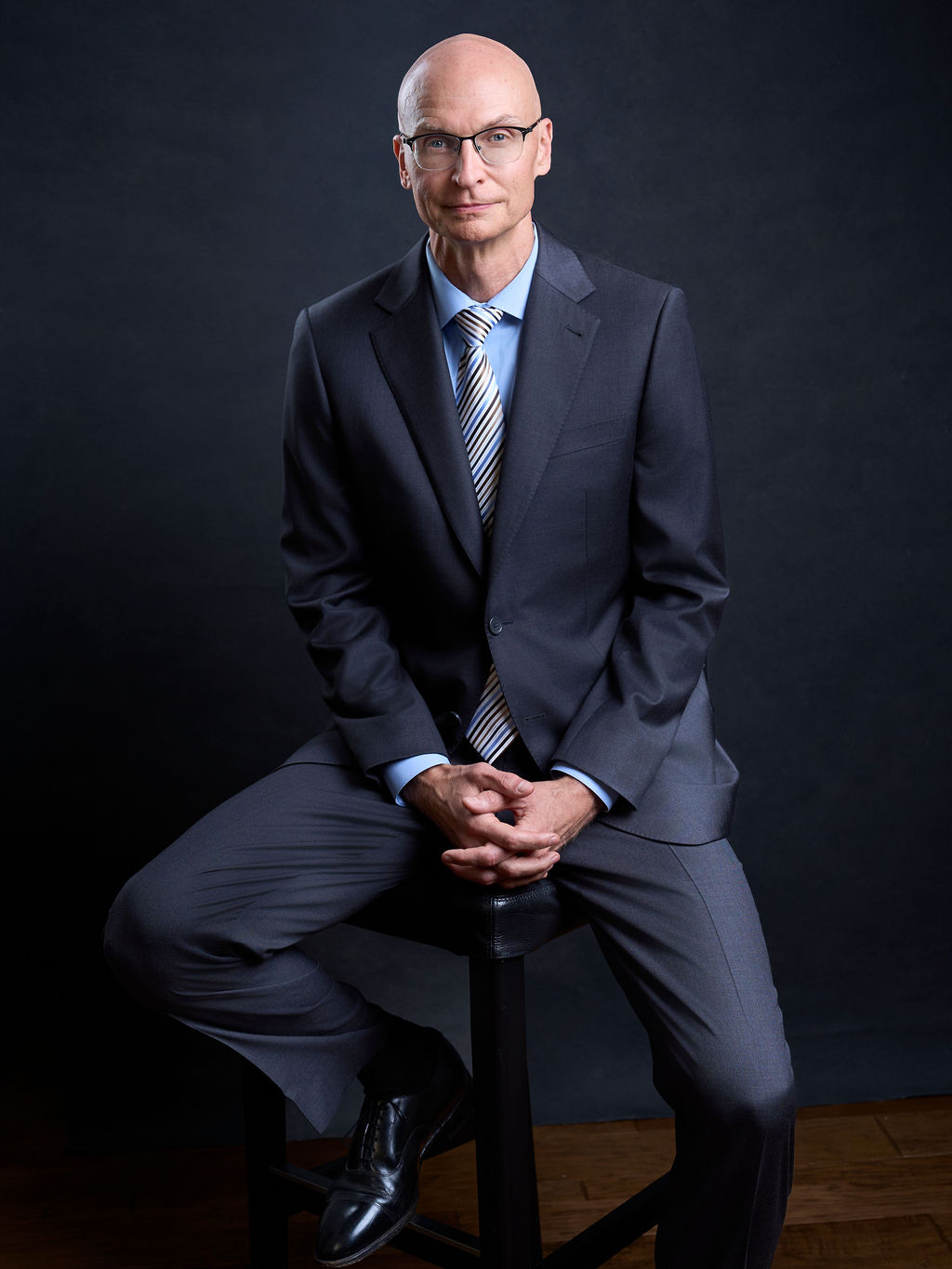
I work with GME programs, academic medical centers, and health systems on culture and faculty development that most curricula don't touch directly: how physicians actually become who they are over a career, and what determines whether identity holds up under pressure or breaks down.
The premise comes from research, not opinion. For my doctoral work, I sat with physicians one conversation at a time, tracing the arc from early training, through the plateau and reckoning of mid-career, to the identity work of leaving a career behind well. What I bring into a room is that research translated into faculty development your institution can actually use — keynotes, workshops, and consulting built around trustworthy belonging and becoming, not burnout as the symptom.
By day, I'm a practicing fellowship-trained rhinologist and a Professor of Surgery and Health Professions Education, where I also lead faculty development work at a VA-affiliated academic medical center. Attending to Self is where that research and clinical experience becomes something I offer independently — to institutions and physicians who want it. For a sense of how I think and present before booking a conversation, two recent podcast appearances are linked on the Research page.
Keynotes & Grand Rounds
-
The Cost of Earning Your Place: Why organizations lose their best energy when belonging must be continually re-earned.
Most institutions build cultures of contingent belonging without meaning to — standing that has to be continually re-earned through performance rather than something a person can rely on. This talk names that mechanism directly: contingent belonging produces identity vigilance, and identity vigilance quietly consumes energy that would otherwise go toward teaching, patient care, or innovation. Audiences leave with a working vocabulary for spotting contingent belonging inside their own culture, and a first look at what building trustworthy belonging would actually take.
-
Becoming, Arriving, Leaving: The Hidden Arc of Professional Identity in Medicine
Physicians rarely think about identity as something with a career-long arc. Identity formation begins early in training, continues through the early faculty years, the long middle of a career, and the eventual transition out of clinical practice. Each stage carries a distinct identity risk, and each is routinely misread as something else: imposter syndrome, burnout, disengagement. Grounded in doctoral research tracing physicians through each of these transitions, this talk maps the arc stage by stage, giving audiences a shared language for recognizing where they’ve been, where they stand now, and what the next transition is likely to ask of them.
Watch the recorded talk → Washington University Grand Rounds, April 2026 · opens in a new tab -
The Hero's Journey: A Narrative Architecture for Professional Identity Formation in Graduate Medical Education
Graduate medical education already asks trainees to undergo a real identity transformation, but rarely gives them, or their faculty, an explicit structure for what that process actually involves. This talk adapts the ‘Hero’s Journey’ as a practical framework programs can use to frame this transformation, building it directly into the curriculum, rather than leaving identity formation to chance. It has been delivered to both intern cohorts and faculty development audiences, and scales to either.
Workshops
Half-day or full-day sessions built around a specific transition point — early career, mid-career plateau, pre-retirement — or a specific institutional need, like feedback culture or faculty retention — each grounded in the same trustworthy-belonging framework as the keynotes. Where it fits, sessions draw on purpose-built instruments designed to assess belonging within the culture or the specific identity challenges of each career phase.
“I've had the pleasure of attending multiple of Dr. McMains' workshops and have learned so much from his wisdom. He has a unique ability to guide the participants through discussions and learning about unfamiliar topics and ideas, and have us come out with a richer understanding.”
— Assistant Dean for Faculty Coaching, Master Certified Physician Development Coach
Consulting
Longer-term partnership with a department, GME office, or health system, building faculty development infrastructure around this framework rather than a single event.
“I have worked with Dr. McMains on faculty development talks and leadership courses for years. He is one of the most thoughtful leaders and speakers I know… He consistently gets people to change behavior and many times their identities as teachers and leaders.”
— Professor of Medicine
Considering bringing this to your program or institution? A line or two about what's on your mind is plenty to start — an event you're planning, a challenge you're seeing in faculty development, a specific need. I'll follow up and we'll talk it through.
Email me directly at: [email protected]
If you'd like to schedule a conversation directly, you can do that on the Schedule page.